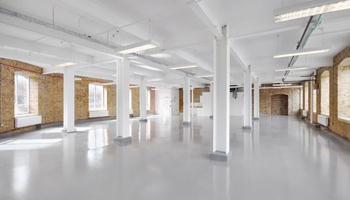
Setting up your first proper premises is a milestone moment. You’ve found the space, signed the lease, and now you’re staring at an empty room that needs equipment to actually function. That’s when the question hits: should you buy or hire?
For most founders, this decision comes at exactly the wrong time financially. You’ve already committed to rent, deposits, and fit-out costs. Capital expenditure on equipment can feel like the last straw for your working capital. Yet equipment is non-negotiable. You need it to operate. The question is how to acquire it without tying up cash you desperately need for payroll, stock, or marketing.
The choice between hiring and buying is not a small one, and can directly shape your cashflow for months or years to come. Getting it wrong can slow growth or, in worst cases, threaten survival. The good news is that there’s a clear framework for thinking through this decision.
The cost of buying
When you buy equipment outright, you pay the full cost upfront. That’s capital gone. A workshop that needs a £5,000 compressor, a salon that needs treatment chairs, a manufacturing unit that needs production machinery; that money leaves your bank account immediately. Even if you finance the purchase through a business loan, you’re locking in monthly repayments that become a fixed overhead. When you’re in the early days of revenue generation, fixed costs are dangerous. They don’t flex with your income. A month where sales are slow doesn’t mean your equipment payment gets smaller.
Understanding what you can realistically afford is essential at this stage. A
budget planner helps you map out your actual monthly outgoings and see where large equipment purchases fit, or don’t, in your cashflow.
The flexibility of hiring
Hiring equipment, by contrast, spreads the cost over time and only commits you for as long as you actually need it. There are no maintenance costs, no insurance to arrange, and no risk of owning something that becomes obsolete or underutilised. When you hire, you also typically get ongoing support from the supplier, which matters when something fails and you can’t afford downtime. Your supplier’s problem becomes how to keep you operational, not yours alone.
If you’re leaning towards hire, look for suppliers offering flexible hire arrangements with multiple term options so you’re not locked into contracts longer than you need. For heavy-duty or industrial equipment, such as
compressed air systems, heating units and specialist machinery, this flexibility is particularly valuable. Kerr Compressors, for example, specialises in short-term, medium-term, and long-term arrangements with ongoing support, giving you access to professional-grade equipment without maintenance responsibility or capital outlay.
What questions should you actually ask?
Rather than defaulting to one option, ask yourself three key questions:
How frequently will I use this equipment?
If it’s daily and essential to operations, ownership might make long-term sense. If you’re using it intermittently or only during peak seasons, hiring is almost always cheaper over the life of the equipment. Equipment that sits idle half the year is wasting money whether you own it or not; with hire, at least you’re only paying for the months you actually need it.
How long do I plan to use it?
If you’re setting up a manufacturing workshop and that equipment will serve you for ten years, buying builds equity and the cost per year drops significantly. If you’re testing a new service line for six months, hiring lets you pivot without being stuck with unused assets that you can’t easily resell or redeploy.
Can I afford to wait if it breaks?
Owned equipment means you manage repairs and handle downtime yourself. Hired equipment typically comes with valuable support and replacement, when every hour of downtime costs you money. A production line down for a week because your compressor failed is a real expense if you own it, but your supplier’s problem if you’re hiring.
Understanding your financial position
These questions frame your thinking, but ultimately you need to see the numbers. Use a
cashflow forecast to map out what you actually have available each month, factoring in all your committed spending. Then you’ll see clearly what room you have for either a capital purchase or recurring hire costs. The forecast isn’t just about knowing your numbers; it’s about understanding the timing of when money actually leaves your account, which shapes your real ability to commit to large purchases. Principal Business Finance has a helpful
guide on the lease versus buy question that walks through the maths in detail.
The practical middle ground
Many founders don’t realise they don’t have to choose one path and stick with it forever. The smartest approach often sits somewhere in between. You might start by hiring while you’re testing a service or validating demand, then buy once the business model is proven and you’re confident in long-term need. Alternatively, you can buy your core production equipment but hire specialist tools for seasonal peaks or specific projects. During rapid scaling phases, many businesses hire temporarily to avoid large capital commitments until cashflow stabilises, then transition to ownership later.
The hybrid approach also works well when equipment evolves. You might hire cutting-edge machinery while you’re learning a process, then buy simpler, proven kit once you know exactly what you need. This flexibility is particularly valuable as your premises themselves might evolve, if you’re planning to move or expand, consider how
low-cost and flexible premises options like coworking spaces and serviced offices align with a flexible equipment strategy. Both premises and equipment choices compound: choosing flexible solutions now gives you genuine options to scale, pivot, or move without being locked into long-term commitments.
Making your decision
Contact three suppliers and get quotes for both purchasing and hiring. Ask each one the same questions about what’s included, what happens if something breaks, and what support they offer. Many founders are surprised to discover that hiring is cheaper than they expected, especially for specialist equipment they might only use seasonally or whilst testing a new service line.
Once you have real quotes, run them through your cashflow forecast. See which option leaves you with more breathing room in your monthly cash position. Most of the time, the answer will be obvious. If hiring costs £300 a month and buying costs £500 upfront plus £100 a month in maintenance and insurance, the maths are clear.
One final consideration: don’t lock yourself into a multi-year commitment just because the monthly cost looks lower. Hire agreements with flexibility built in let you adjust as your business evolves. You might start by hiring, prove demand, and then buy once you’re confident in the long-term need.
Your first premises is exciting. Equipment decisions don’t have to be the thing that derails you. Get the numbers, and let the data guide your choice.
Guest contributor